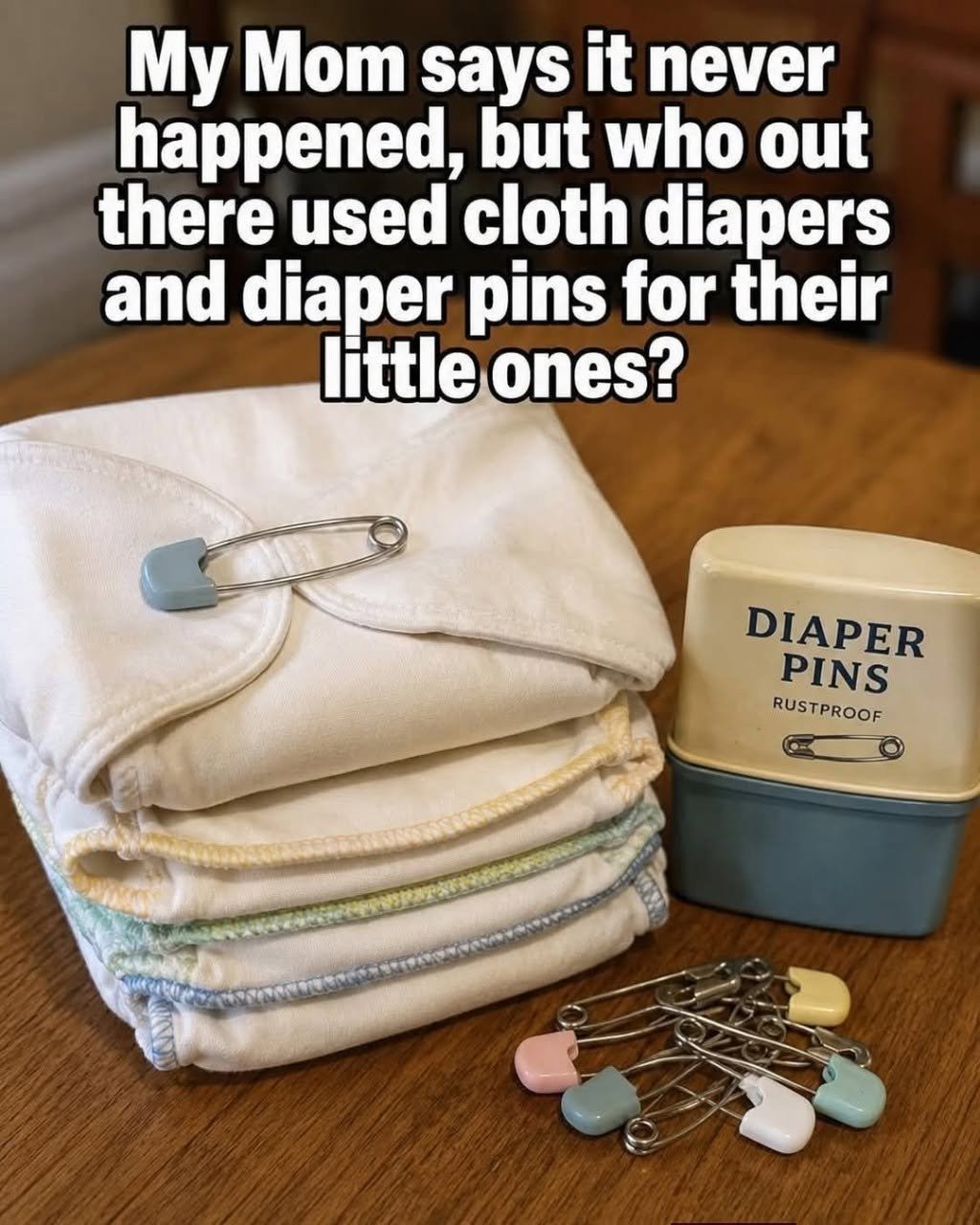
Did Parents Really Use Diaper Pins?
Absolutely.
Diaper pins were a common tool for traditional cloth diapering, particularly before modern snap and hook-and-loop closures became widely available.
They were larger than ordinary safety pins and were designed to accommodate multiple layers of thick fabric. Many featured a protective cap or locking mechanism that helped keep the pin securely closed.
For experienced caregivers, fastening a cloth diaper could become a quick and routine part of changing a baby.
What Were the Challenges?
Cloth diapering had plenty of advantages, but it also required more work.
Common challenges included:
- Frequent washing
- Extra laundry
- Drying time
- Potential leaks
- Careful folding
- Proper pin placement
- Managing soiled diapers while traveling
- Keeping enough clean diapers available
For families without convenient laundry facilities, these tasks could be particularly demanding.
Still, generations of parents successfully incorporated cloth diapers into their daily routines.
The Rise of Disposable Diapers
Disposable diapers became increasingly popular during the 20th century as manufacturers improved their design, absorbency, fit, and convenience.
For many families, disposable diapers offered a major advantage: once used, they could simply be discarded.
They also made travel and childcare easier by reducing the need to carry soiled diapers home for washing.
Over time, disposable diapers became the dominant choice for many households, while traditional pin-fastened cloth diapers became less common.
Why Are Cloth Diapers Still Popular Today?
Cloth diapering never completely disappeared.
Modern reusable diapers are dramatically different from many traditional designs. Instead of requiring separate diaper pins, today’s systems may include:
- Adjustable snap closures
- Hook-and-loop fasteners
- Waterproof outer layers
- Removable absorbent inserts
- Multiple size adjustments
- Washable liners
- Modern fabrics and designs
Some parents choose reusable diapers because they appreciate the ability to wash and reuse them. Others are attracted by potential long-term savings or the desire to reduce disposable household waste.
The best choice depends on a family’s circumstances, preferences, laundry access, and budget.
How to Care for Modern Cloth Diapers
If you use reusable cloth diapers today, always follow the manufacturer’s washing instructions.
General care may include:
- Remove solid waste according to the diaper manufacturer’s guidance.
- Store used diapers appropriately until wash day.
- Rinse when necessary.
- Wash with a suitable detergent.
- Avoid excessive fabric softener because it can interfere with absorbency.
- Dry the diapers completely.
- Store clean diapers somewhere dry and clean.
Proper washing is important not only for maintaining absorbency but also for keeping reusable diapers hygienic.
Frequently Asked Questions
Were diaper pins safe?
Diaper pins were designed with safety features such as locking caps, but they still required careful handling. Caregivers needed to ensure that the pin was securely closed and positioned away from the baby’s skin.
Did babies get diaper rash with cloth diapers?
Yes. Diaper rash can occur with both cloth and disposable diapers. Frequent diaper changes, gentle cleaning, and keeping the baby’s skin clean and dry can help reduce the risk.
Are cloth diapers still available?
Yes. Modern reusable cloth diapers are widely available and usually use snaps, hook-and-loop closures, or other fastening systems instead of traditional diaper pins.
Are cloth diapers better than disposable diapers?
Neither option is universally better for every family.
Disposable diapers offer convenience and generally require less laundry. Cloth diapers can be washed and reused many times and may reduce the amount of disposable material entering the household waste stream.
The right choice depends on factors such as lifestyle, budget, laundry access, personal preferences, and convenience.
A Simple Parenting Tradition That Refuses to Disappear
For parents and grandparents who remember them, cloth diapers and diaper pins represent an earlier era of parenting—one where baby care involved more laundry, more preparation, and plenty of hands-on routines.
Yet cloth diapers weren’t simply an outdated inconvenience. They were a practical solution that worked for generations of families.
Today, reusable diapers have returned in a modern form, combining the basic principle of washable fabric with improved materials and convenient fasteners.
Whether you remember the familiar sight of white diapers drying on a clothesline or you’re considering reusable diapers for your own family, the story of cloth diapering is a fascinating reminder of how everyday parenting products have changed—and how some practical ideas never truly disappear.
For Complete Cooking STEPS Please Head On Over To Next Page Or Open button (>)