Step-by-Step Instructions
1. Prepare the Oven and Pan
Preheat your oven to 325°F (165°C).
Line the bottom of a 9-inch round cake pan with parchment paper if desired, but do not grease the sides of the pan.
The batter needs to be able to grip the sides as it rises during baking.
2. Separate the Eggs
Carefully separate the six eggs, placing the whites in a completely clean, dry mixing bowl.
Make sure there is no yolk mixed into the whites, as even a small amount of fat can make it more difficult to achieve a stable foam.
Allow the eggs to reach room temperature before whipping.
3. Prepare the Egg Yolk Mixture
In a separate bowl, whisk the egg yolks with half of the granulated sugar and the vanilla extract.
Continue mixing until the mixture becomes lighter and slightly creamy.
Gradually sift in the flour and gently combine until a smooth batter forms.
4. Whip the Egg Whites
Add the cream of tartar and a pinch of salt to the egg whites.
Begin beating at medium speed until the whites become foamy.
Gradually add the remaining sugar while continuing to beat.
Increase the speed and whip until the egg whites form firm, glossy peaks.
Avoid overbeating the whites, as they should remain smooth and flexible rather than dry or clumpy.
5. Fold the Mixtures Together
Add approximately one-third of the whipped egg whites to the yolk mixture.
Gently fold with a silicone spatula to lighten the batter.
Add the remaining egg whites in two additions, folding carefully after each addition.
Use a gentle motion and avoid vigorous stirring. Preserving the air trapped inside the egg whites is essential for achieving the cake’s characteristic fluffy texture.
6. Transfer to the Pan
Pour the batter into the prepared ungreased cake pan.
Smooth the surface gently with a spatula.
Avoid tapping or dropping the pan heavily, as this can release some of the air incorporated into the batter.
7. Bake the Cake
Place the cake in the preheated oven and bake for approximately 30–35 minutes, or until the top is lightly golden and the cake feels set.
Avoid opening the oven repeatedly during baking because sudden temperature changes can cause a delicate foam cake to lose volume.
8. Cool Upside Down
Remove the cake from the oven and carefully invert the pan onto a cooling rack.
Allow the cake to cool completely while inverted.
Once completely cool, carefully loosen the edges with a thin knife or offset spatula and remove the cake from the pan.
9. Add Your Favorite Toppings
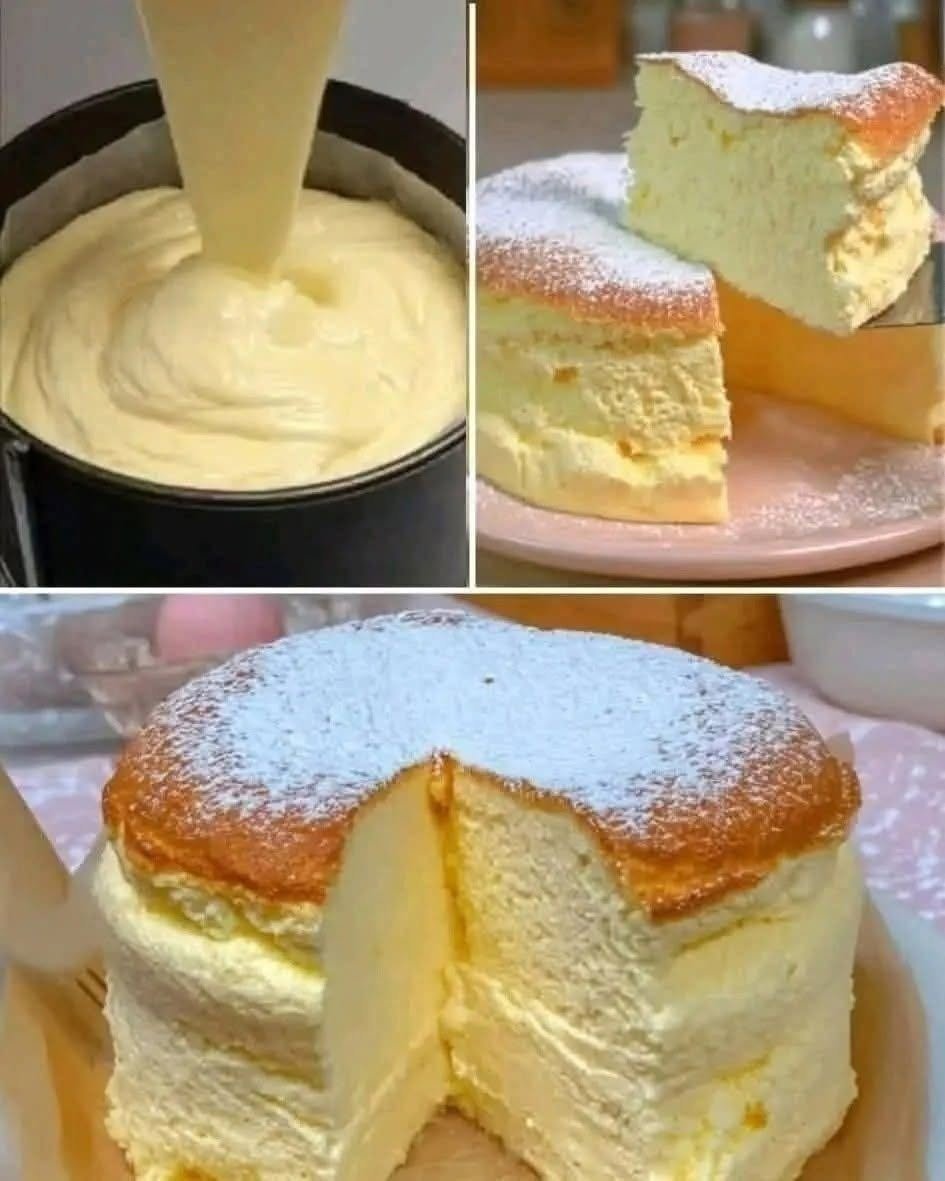
For a simple presentation, dust the cooled cake with powdered sugar.
You can also serve it with:
- Fresh strawberries
- Blueberries
- Raspberries
- Whipped cream
- Fresh peaches
- Berry sauce
- Light vanilla glaze
The Science Behind the Airy Texture
The unique texture of cloud cake comes primarily from whipped egg whites.
When egg whites are beaten, their proteins unfold and form a network around tiny air bubbles. This structure allows the batter to expand in the oven and creates the cake’s characteristic light crumb.
Why Cream of Tartar Helps
Cream of tartar provides acidity that helps stabilize the whipped egg-white foam. A stable foam is particularly important because the cake relies on trapped air for much of its rise.
Why the Pan Should Stay Ungreased
Unlike many traditional cakes, this type of foam cake benefits from an ungreased pan.
As the batter expands, it needs to grip the sides of the pan. A layer of butter or oil can make the surface too slippery, potentially preventing the cake from climbing properly.
Why Cooling Upside Down Matters
The cake’s delicate internal structure is still setting as it cools.
Cooling the cake upside down helps reduce the risk of the airy sponge collapsing under its own weight while the internal structure stabilizes.
Tips for a Perfect Cloud Cake
Use clean equipment. Any grease or egg yolk in the mixing bowl can interfere with egg-white whipping.
Sift the flour. This helps distribute the flour evenly and keeps the batter light.
Fold gently. Excessive mixing can deflate the whipped egg whites.
Don’t grease the pan. The batter needs traction to rise.
Avoid sudden temperature changes. Keep the oven door closed as much as possible during baking.
Cool the cake completely. Removing it too early can damage its delicate structure.
How to Serve Cloud Cake
This light sponge is delicious on its own, but simple toppings can turn it into an elegant dessert.
For a classic presentation, dust the top with powdered sugar and add fresh berries.
For a richer dessert, serve each slice with whipped cream and a spoonful of homemade berry sauce.
You can also pair it with seasonal fruit for a naturally sweet and refreshing finish.
Storage
Keep the cooled cake in an airtight container at room temperature for a short period, or refrigerate it if you prefer a chilled dessert.
If refrigerated, allow the cake to sit at room temperature briefly before serving for the softest texture.
Final Thoughts
This Easy Cloud Cake is a wonderful example of how a few simple ingredients can create an extraordinary dessert. By carefully whipping the egg whites, folding the batter gently, and allowing the cake to cool properly, you can achieve a beautifully light and airy sponge.
Whether topped with powdered sugar and berries or served with whipped cream, this delicate homemade cake makes a lovely dessert for family gatherings, afternoon tea, birthdays, and special occasions.
Frequently Asked Questions
Why did my cloud cake collapse?
A cloud cake can lose volume if the egg whites are under-whipped, over-mixed during folding, or if the cake is removed from the oven before its structure has fully set.
Can I grease the cake pan?
For this style of foam cake, the sides should remain ungreased so the batter can grip the pan as it rises.
Why are room-temperature eggs recommended?
Room-temperature egg whites generally whip more easily and can produce a stable, airy foam.
What can I serve with cloud cake?
Fresh berries, powdered sugar, whipped cream, fruit sauce, and sliced seasonal fruit all pair beautifully with this light sponge.
For Complete Cooking STEPS Please Head On Over To Next Page Or Open button (>)