🔬 Does a Watermelon Continue Ripening After Harvest?
This is an important point.
Unlike fruits such as bananas or peaches, watermelon is generally considered a non-climacteric fruit. It does not undergo the same dramatic ripening process after harvest.
That means choosing a good melon at the store matters.
Storage can affect the fruit’s texture and freshness, but leaving an underripe watermelon on the counter generally won’t transform it into an exceptionally sweet, fully ripe melon.
🍬 What Actually Determines Watermelon Sweetness?
Sweetness begins long before the watermelon reaches the grocery store.
Several factors influence the final flavor, including:
- Watermelon variety
- Growing conditions
- Sunlight exposure
- Irrigation
- Plant health
- Pollination
- Harvest maturity
- Weather during development
Sugar accumulation inside the fruit is influenced by the plant’s ability to produce and transport carbohydrates during development.
That’s why exterior appearance can provide useful clues, but no visual trick can guarantee the exact sweetness of every watermelon.
🚫 Common Watermelon-Picking Myths
“More brown webbing always means sweeter fruit.”
Not necessarily. Webbing is a natural developmental marking and isn’t a dependable measurement of sugar content.
“A perfectly round watermelon is always better.”
Shape can help identify a healthy-looking fruit, but it doesn’t determine sweetness by itself.
“The yellowest watermelon is automatically the sweetest.”
A creamy-yellow field spot is a useful maturity clue, but field-spot color alone cannot predict exact sugar levels.
“A shiny watermelon is always unripe.”
Rind appearance varies between varieties, so glossiness should be considered alongside weight, field spot, stem condition, and overall appearance.
🛒 The Quick Grocery Store Checklist
If you don’t want to remember all the details, use this simple checklist:
Look for:
✅ A creamy yellow field spot
✅ A watermelon that feels heavy for its size
✅ A healthy, symmetrical shape
✅ No major bruises, cracks, or soft spots
✅ A mature-looking rind
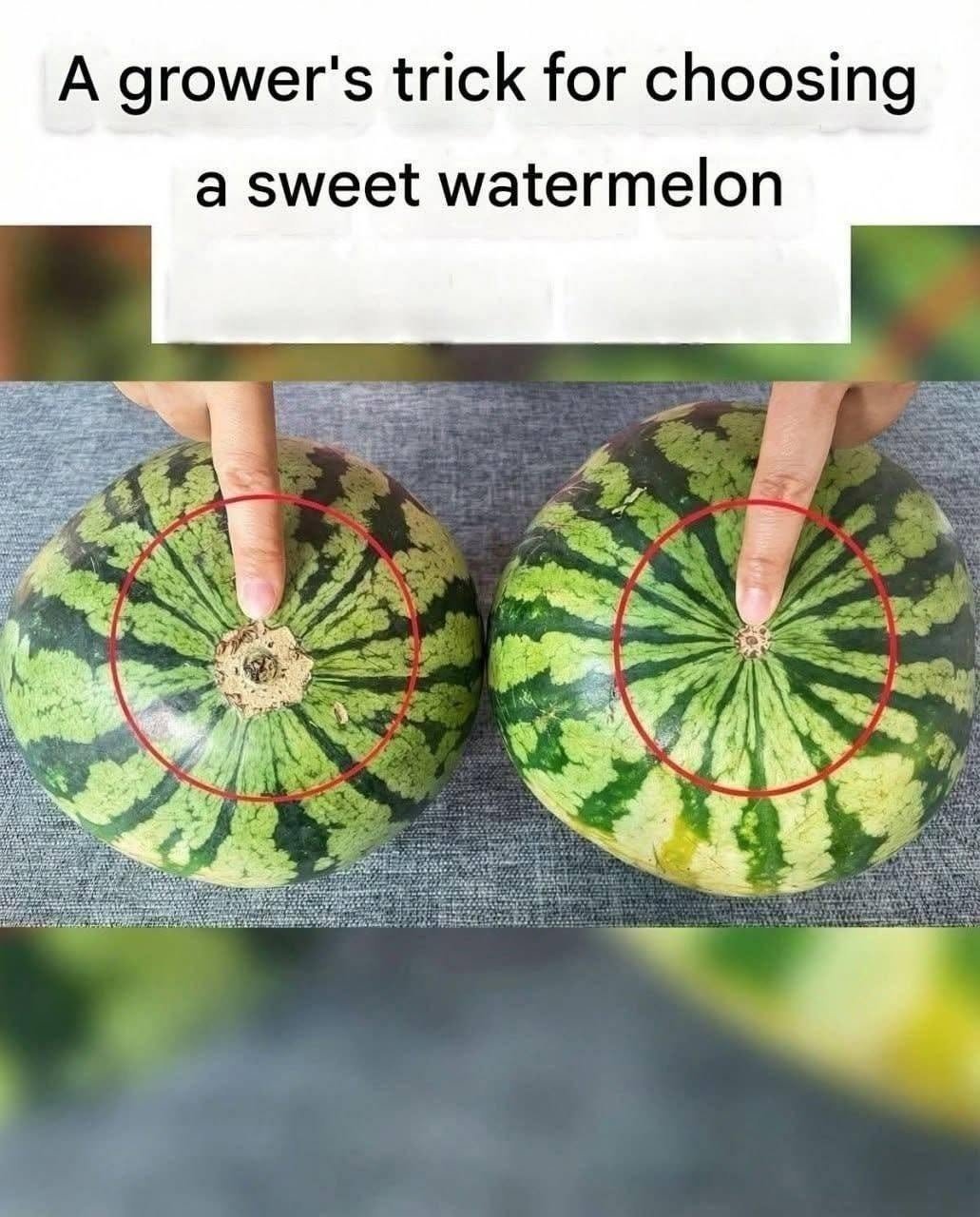
✅ A dry stem when a stem is present
Then compare several watermelons rather than grabbing the first one you see.
How to Store Your Watermelon
Once you’ve brought your watermelon home, storage matters too.
An intact watermelon can generally be kept in a cool location for a limited period, but refrigeration can help preserve quality once it has been cut.
After slicing, place the pieces in a clean, covered container and refrigerate promptly.
For the best texture and flavor, enjoy cut watermelon while it is fresh.
Final Thoughts
Choosing a sweet watermelon isn’t about finding one magical marking on the rind. The best approach is to combine several clues.
Look for a mature-looking field spot, compare the weight of similarly sized melons, inspect the rind and stem, and avoid fruit with obvious damage.
Most importantly, remember that watermelon varieties differ. A clue that works well for one variety may be less useful for another.
With a little practice, you’ll become much better at judging watermelons before you ever reach for the knife—and your next summer slice may be exactly what you’re hoping for: cold, juicy, crisp, and naturally sweet.
For Complete Cooking STEPS Please Head On Over To Next Page Or Open button (>)