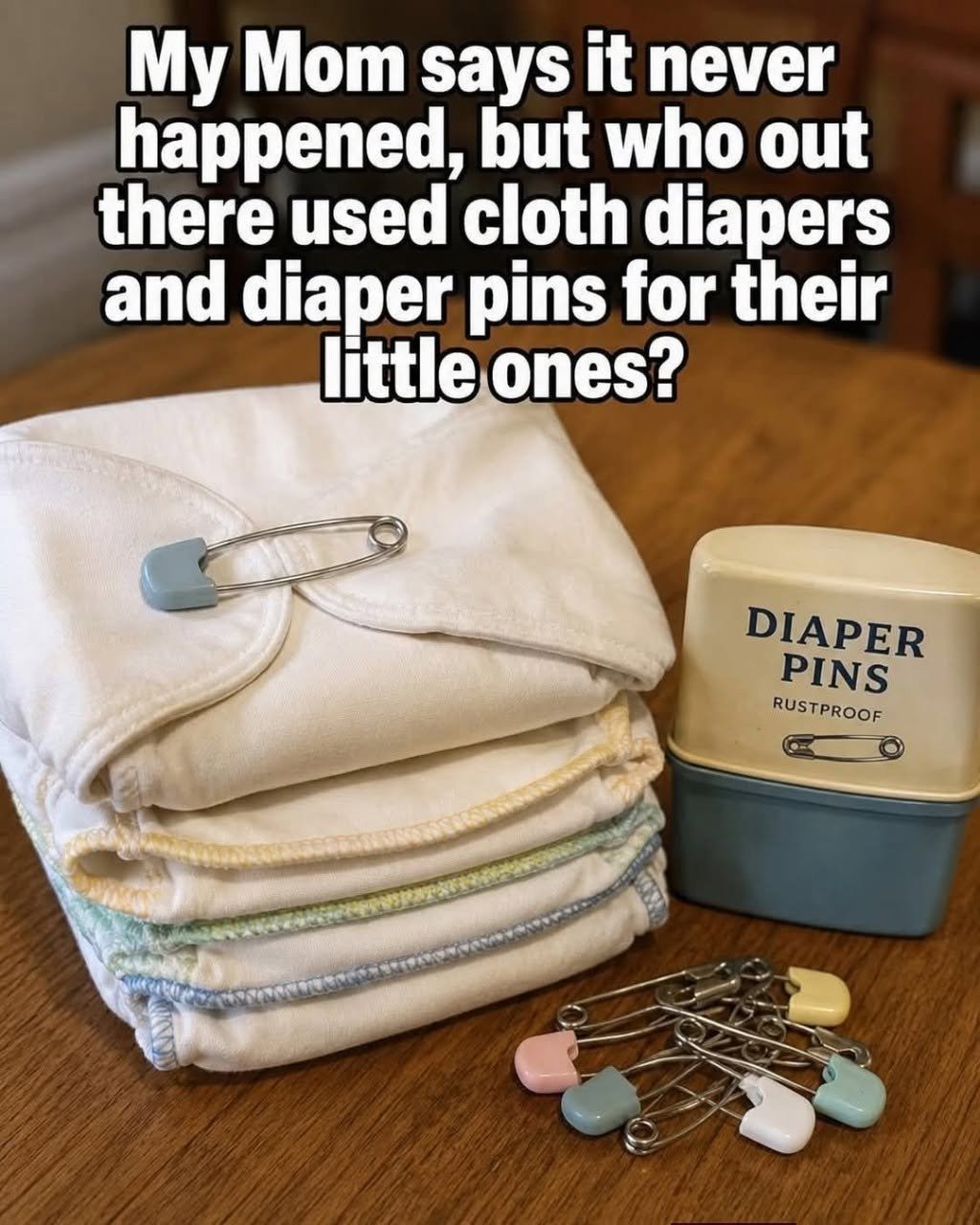
Before disposable diapers became a familiar part of everyday baby care, millions of parents relied on a much simpler system: soft cloth diapers, careful folding, and sturdy diaper pins.
If you grew up seeing stacks of neatly folded white diapers beside a changing table, along with a small container of safety-style pins, you’re remembering a routine that was once completely ordinary.
Cloth diapers required more washing, folding, and preparation than modern disposable diapers, but they were inexpensive, reusable, and durable. In many families, the same collection of diapers could be used for more than one child.
Today, modern reusable diapers have replaced many of the traditional designs, but the basic idea remains remarkably similar.
What Were Cloth Diapers?
Traditional cloth diapers were generally made from absorbent cotton fabric. They could be simple square diapers that caregivers folded into different shapes or prefolded designs with thicker, more absorbent sections in the center.
After being positioned around the baby, the diaper was secured using a specially designed diaper pin.
Unlike ordinary sewing or household pins, diaper pins were larger and typically featured a protective locking mechanism designed to keep the sharp point covered when closed.
Families would wash the diapers after use, dry them thoroughly, fold them, and store them for the next diaper change.
Why Did Parents Choose Cloth Diapers?
1. They Were Economical
One of the biggest advantages was simple: reusability.
Instead of purchasing new diapers every week, families could buy a supply of cloth diapers and wash them repeatedly. This made them especially attractive to households trying to keep baby-care expenses manageable.
2. They Could Be Reused
A well-maintained cloth diaper could be washed hundreds of times.
After changing the baby, caregivers would clean the diaper, wash it with detergent, dry it, and fold it for future use. Some families even passed cloth diapers from older children to younger siblings.
3. They Created Less Disposable Waste
Because cloth diapers were designed to be washed and reused, they did not need to be discarded after every use.
However, their environmental impact depends on factors such as washing frequency, water consumption, energy use, detergent, and how long the diapers are reused.
4. Cotton Was Soft and Familiar
Traditional cloth diapers were commonly made from cotton, which provided a soft, absorbent fabric against a baby’s skin.
They were also useful beyond diapering. Clean cotton diapers were sometimes repurposed as burp cloths, cleaning cloths, or household towels.
How Were Traditional Cloth Diapers Used?
Using a traditional cloth diaper required a little practice.
Step 1: Fold the Diaper
The caregiver first folded the cloth into a shape appropriate for the baby’s size.
Different folding methods could provide additional absorbency or help create a better fit around the legs.
Step 2: Position the Baby
The baby was placed carefully on top of the diaper, with the center section positioned beneath the bottom.
The front portion was then brought upward between the baby’s legs.
Step 3: Secure the Diaper
The sides of the diaper were folded into place and secured with diaper pins.
Caregivers needed to work carefully because the pins had sharp points. Many traditional diaper pins included locking covers to help prevent accidental opening.
Parents typically kept their fingers between the pin and the baby’s skin while fastening it.
Step 4: Add a Waterproof Cover
Many cloth-diaper systems used a waterproof outer cover to reduce leaks.
Older covers were often made from plastic or vinyl materials, while modern reusable diapers typically use waterproof fabrics designed specifically for diapering.
Step 5: Wash and Reuse
After use, the diaper was placed with the laundry and washed before being dried and folded again.
This meant cloth diapering created a regular cycle of changing, washing, drying, folding, and storing.
Did Parents Really Use Diaper Pins?
For Complete Cooking STEPS Please Head On Over To Next Page Or Open button (>)