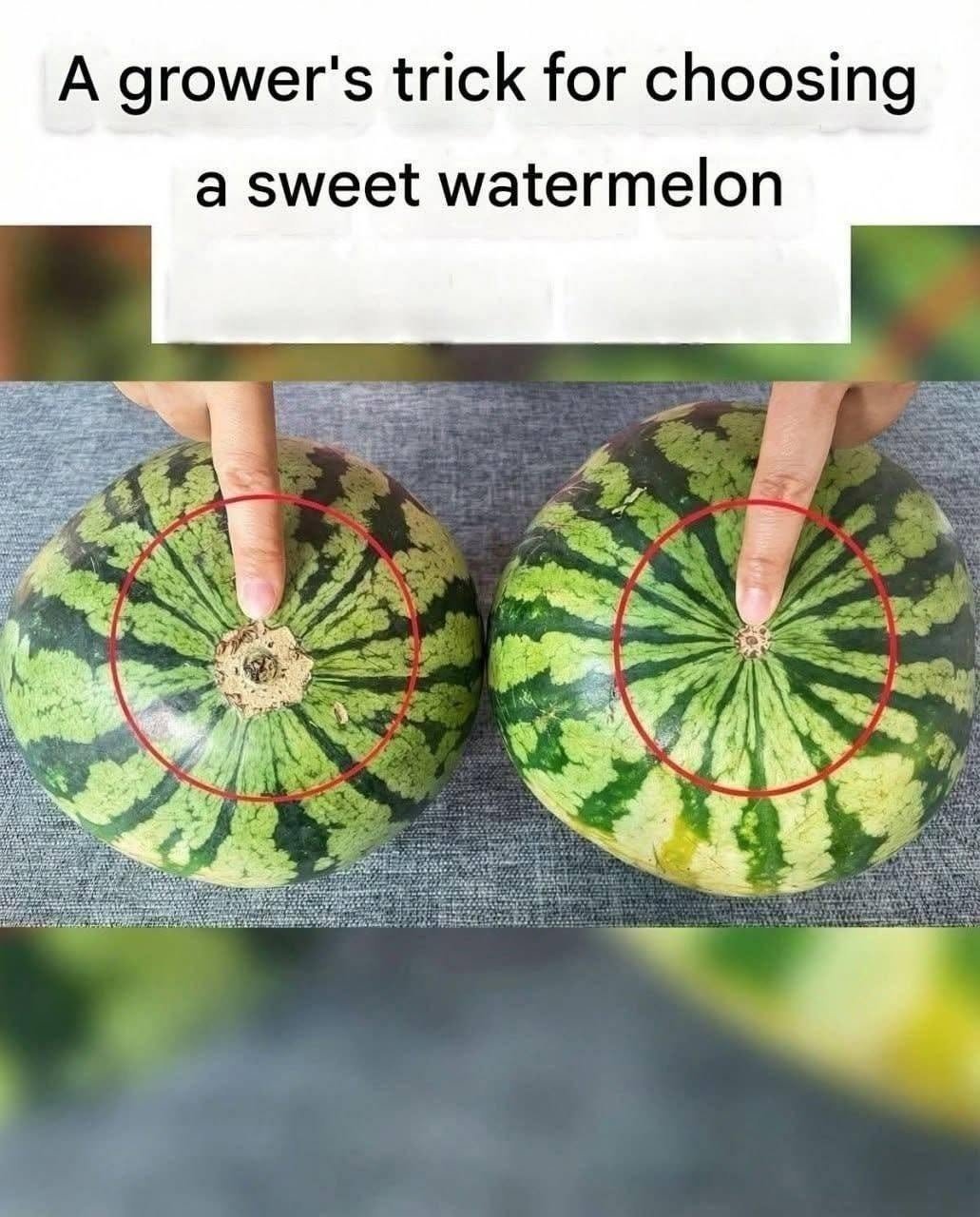
There is nothing quite like biting into a cold, juicy slice of watermelon on a hot summer day. But choosing the right one can sometimes feel like a guessing game.
You pick a watermelon that looks beautiful on the outside, take it home, cut it open—and discover pale flesh, a watery texture, or disappointing flavor.
The good news is that you can improve your chances of choosing a flavorful watermelon by looking carefully at several exterior clues.
While no single sign can guarantee sweetness, the field spot, rind appearance, stem condition, weight, and overall shape can help you make a much better choice.
🍉 Step-by-Step Selection Guide
1. Look for a Large Creamy-Yellow Field Spot
One of the most useful clues is the field spot, also called the ground spot.
This is the area where the watermelon rested against the ground while it was growing.
Look for a spot that is creamy yellow, buttery yellow, or deep golden yellow.
A very pale white or greenish field spot can indicate that the melon may not have spent as much time maturing on the plant.
However, remember that field-spot color can vary naturally depending on the variety and growing conditions, so it should be considered together with the other signs.
2. Choose a Dull, Matte Rind
Take a close look at the watermelon’s skin.
A mature watermelon often develops a duller, less glossy appearance as it reaches harvest maturity.
An extremely shiny rind can sometimes indicate that the fruit is less mature, although rind appearance also varies among different watermelon varieties.
Rather than focusing on color alone, compare several watermelons sitting next to each other.
3. Pick a Watermelon That Feels Heavy
Weight is one of the simplest tests you can perform at the store.
Pick up a few watermelons of similar size and compare them.
The heavier one is often a good choice because watermelon contains a large amount of water. A fruit that feels unusually light for its size may be less juicy.
This doesn’t guarantee sweetness, but it can help you find a watermelon with a satisfying, juicy texture.
4. Examine the Stem
If the watermelon still has part of its stem attached, take a look at it.
A dry, brown, and withered-looking stem can be a useful indication that the fruit has reached a mature stage.
A green, fresh-looking stem may suggest that the watermelon was harvested relatively recently, although stem appearance alone cannot tell you exactly how sweet the fruit will be.
The harvest timing and variety matter too.
5. Check the Shape
Choose a watermelon with a symmetrical, well-developed shape.
Avoid fruits with unusually deep dents, major bruises, soft spots, cracks, or areas that appear damaged.
A few harmless surface markings are normal, but significant physical damage can affect quality and may create opportunities for spoilage.
6. Don’t Rely Too Much on Webbing
You may have heard that brown, web-like markings on watermelon skin are a secret sign of exceptional sweetness.
These markings can occur naturally as the fruit develops, but they do not reliably prove that a watermelon contains more sugar.
In other words, don’t reject a watermelon simply because it has little webbing—and don’t automatically choose one simply because it has lots of it.
Use webbing as a secondary visual clue rather than a guarantee of sweetness.
7. Listen to the Sound
The traditional “knock test” can be fun, but it isn’t a scientifically reliable way to measure sugar content.
If you gently tap a watermelon, a mature, juicy fruit may produce a relatively deep, resonant sound. A dull or flat sound can sometimes indicate differences in internal condition.
Still, sound is subjective and difficult to interpret consistently.
For the best results, use it together with the more visible indicators rather than depending on it alone.
🔬 Does a Watermelon Continue Ripening After Harvest?
For Complete Cooking STEPS Please Head On Over To Next Page Or Open button (>)